Transcending impermanence
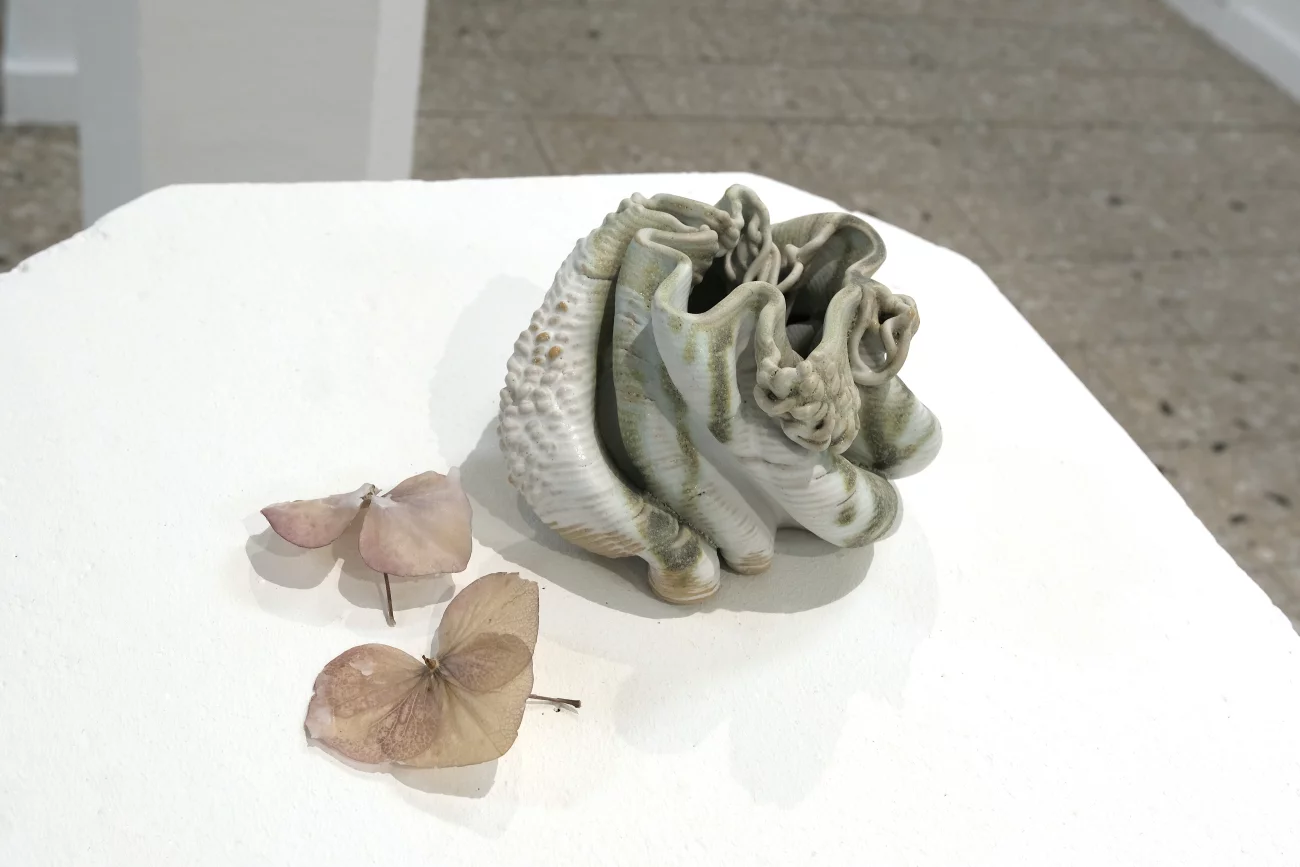
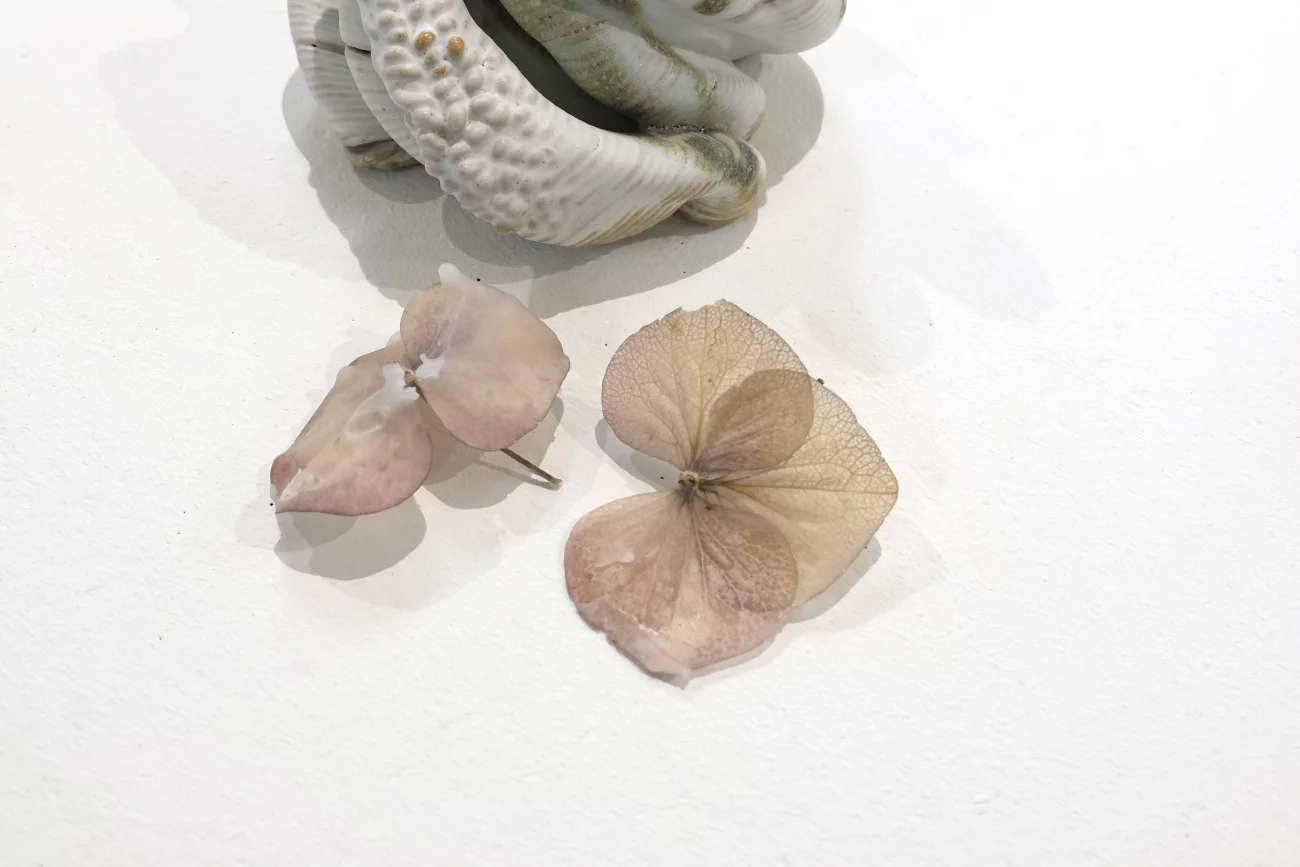
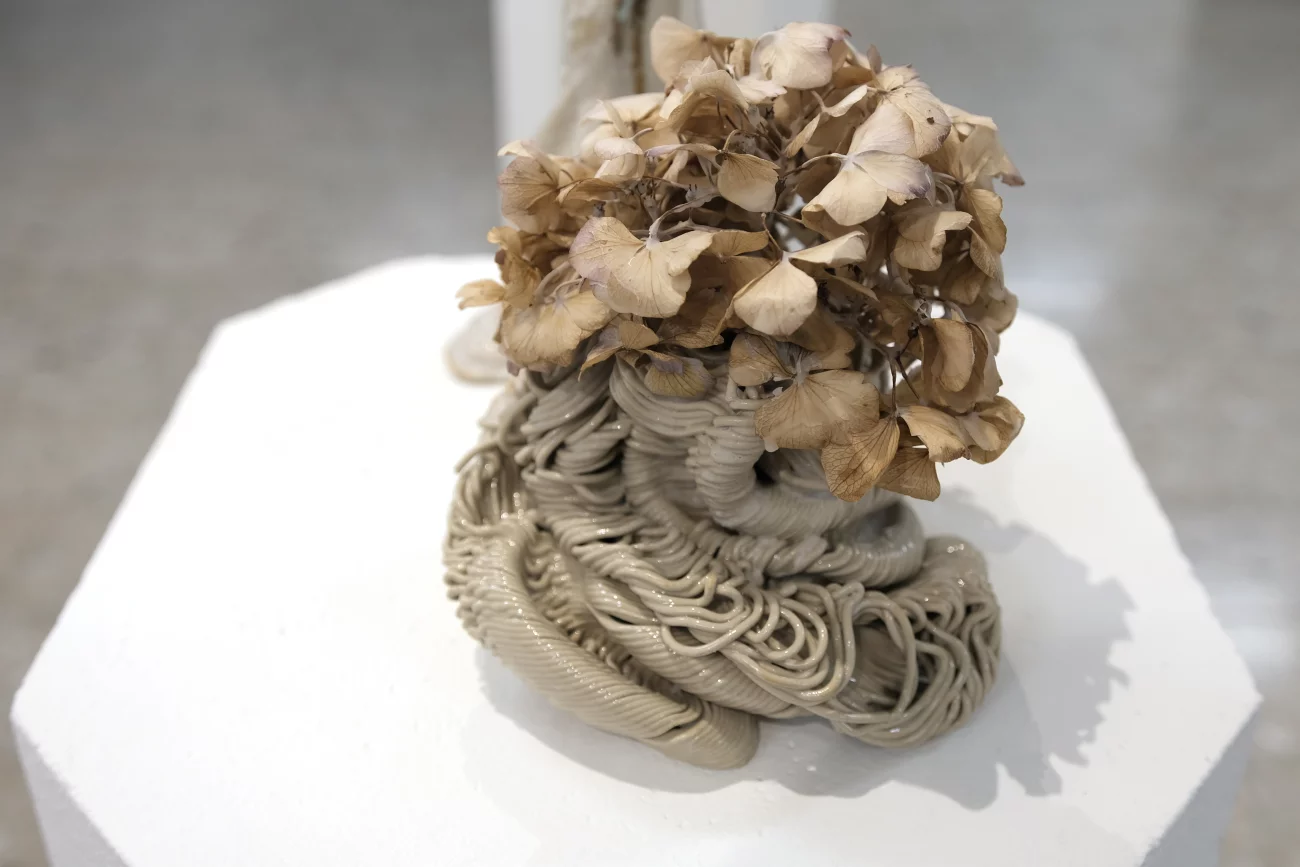
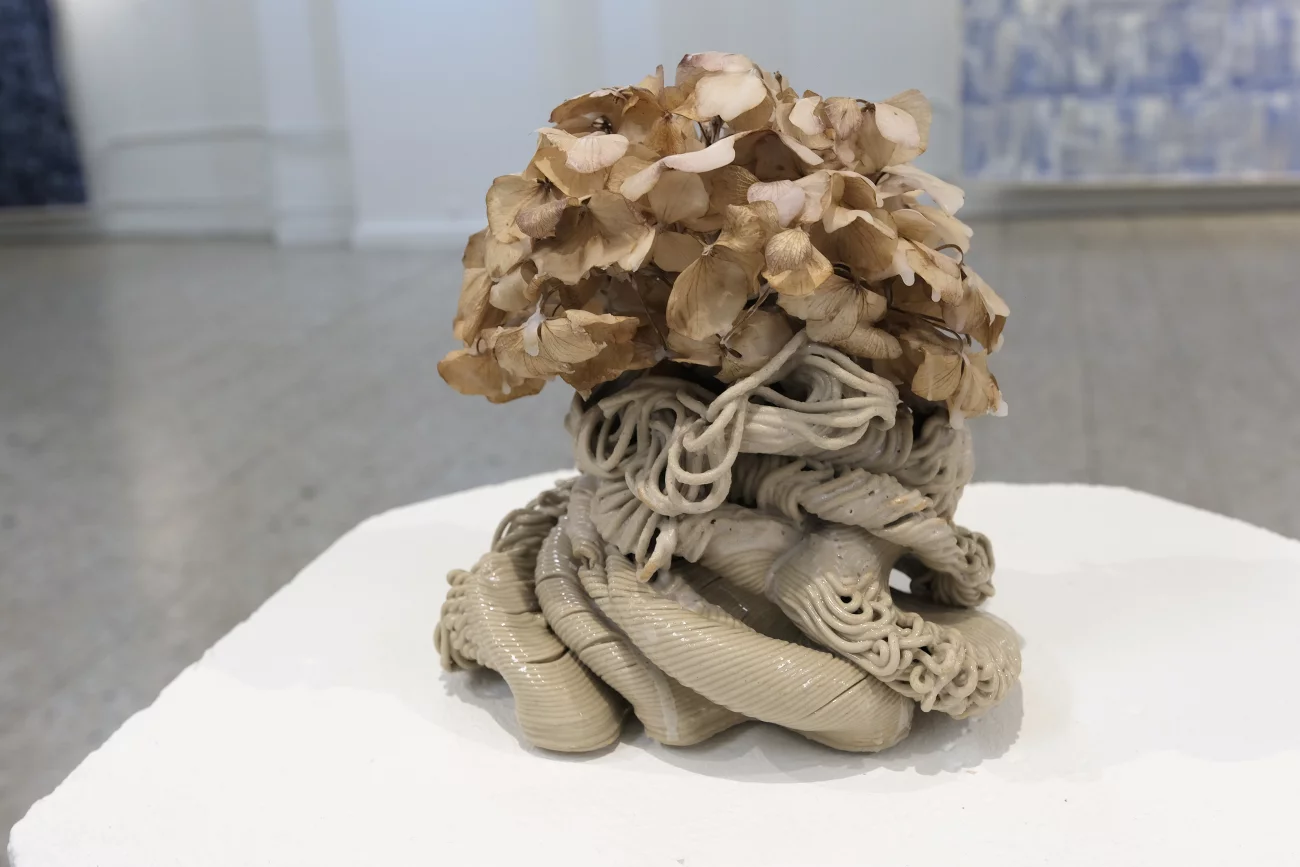
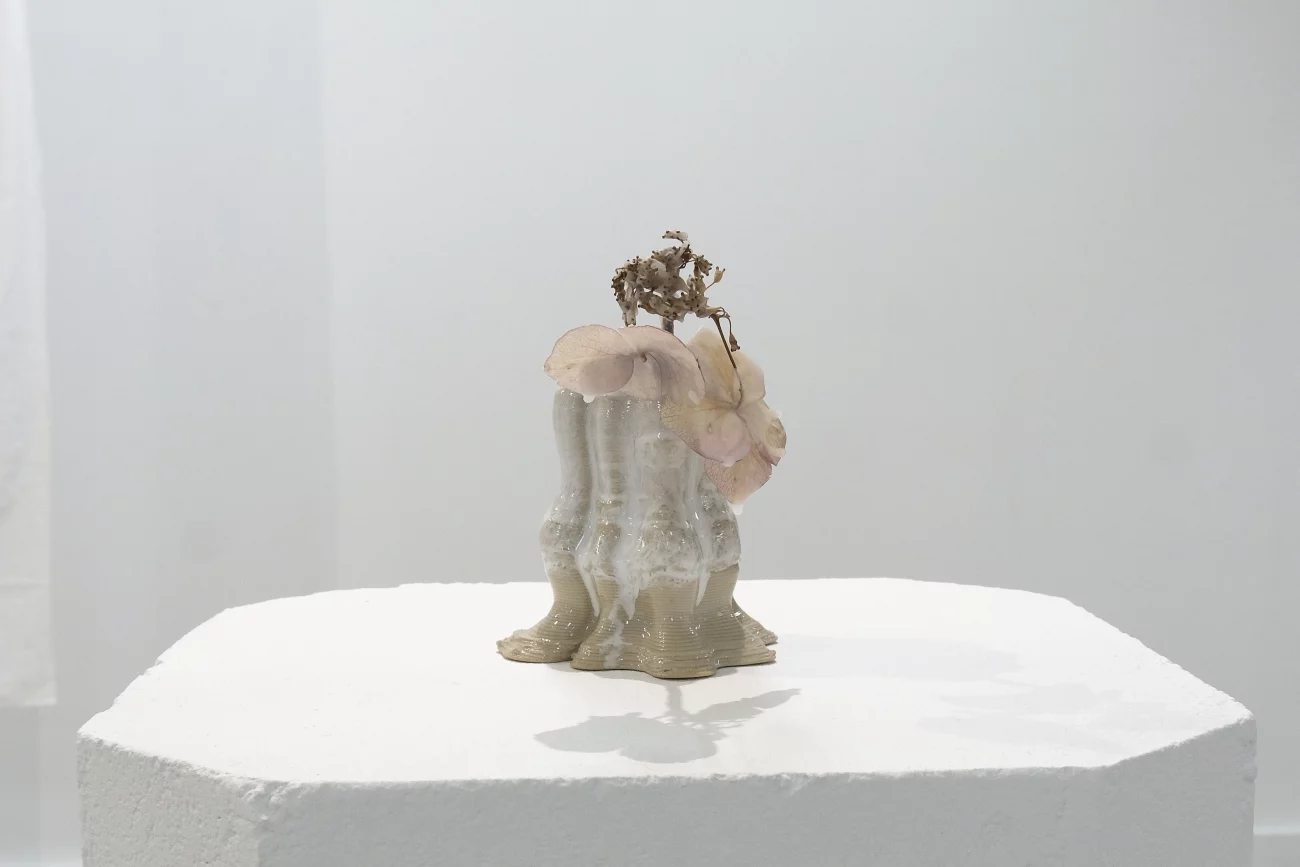
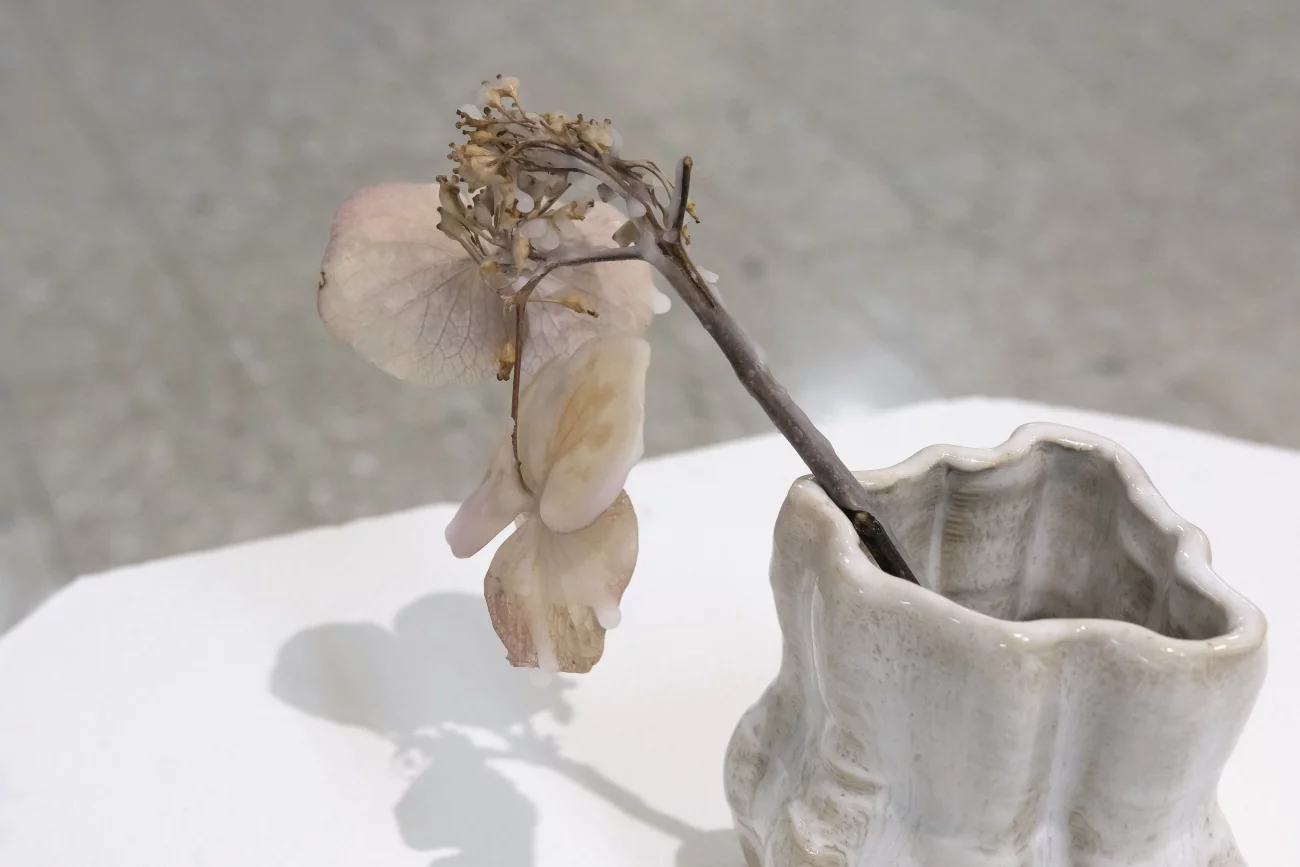
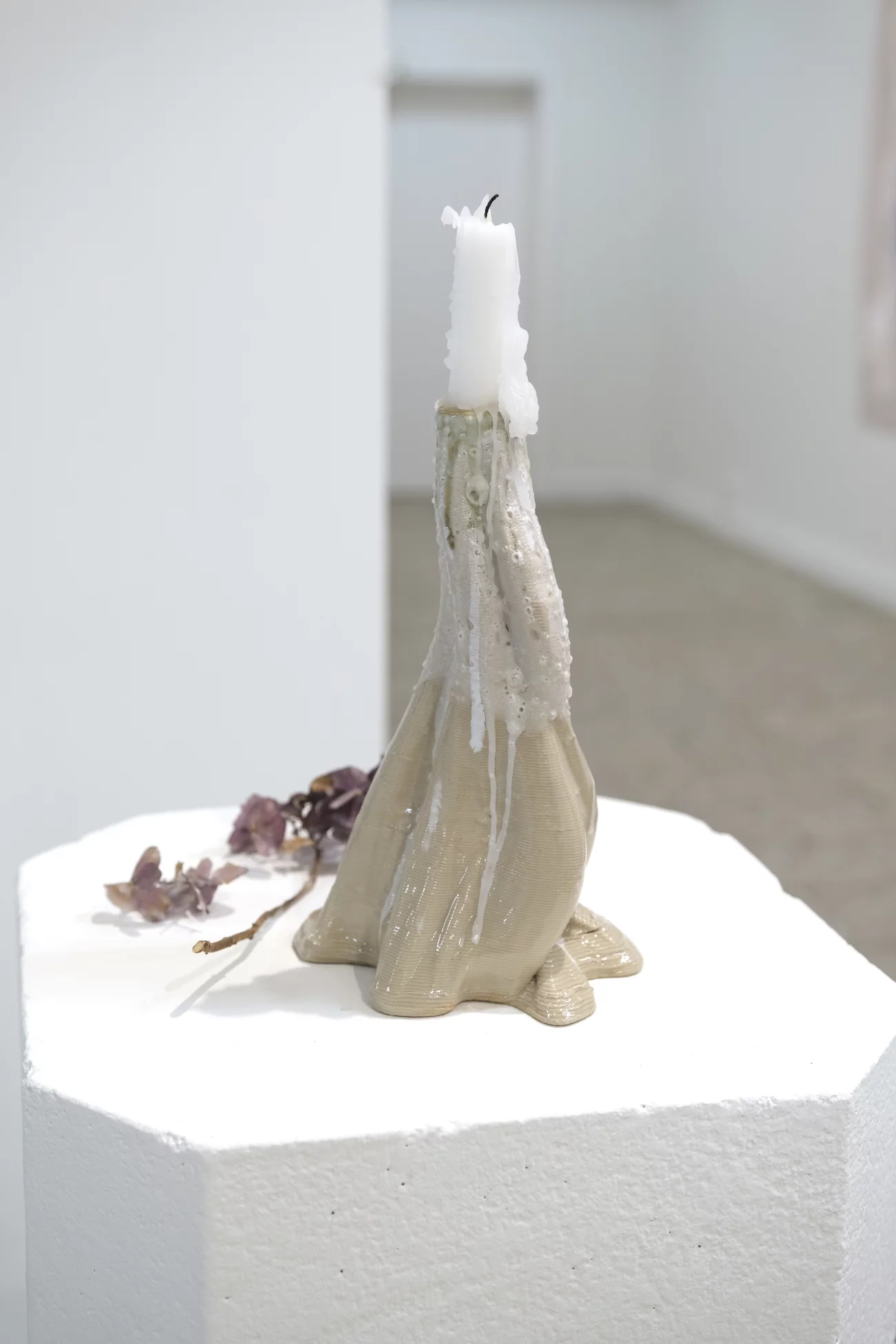
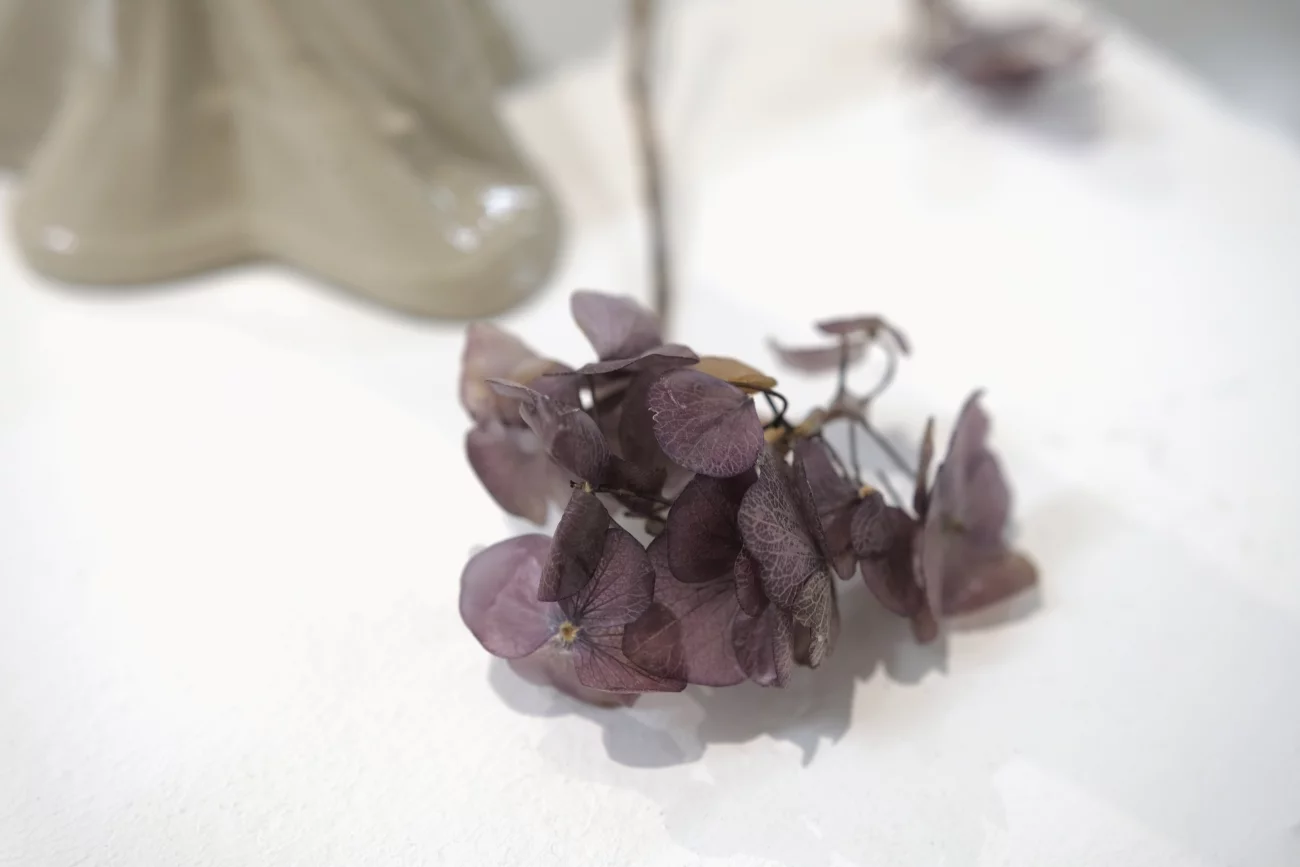
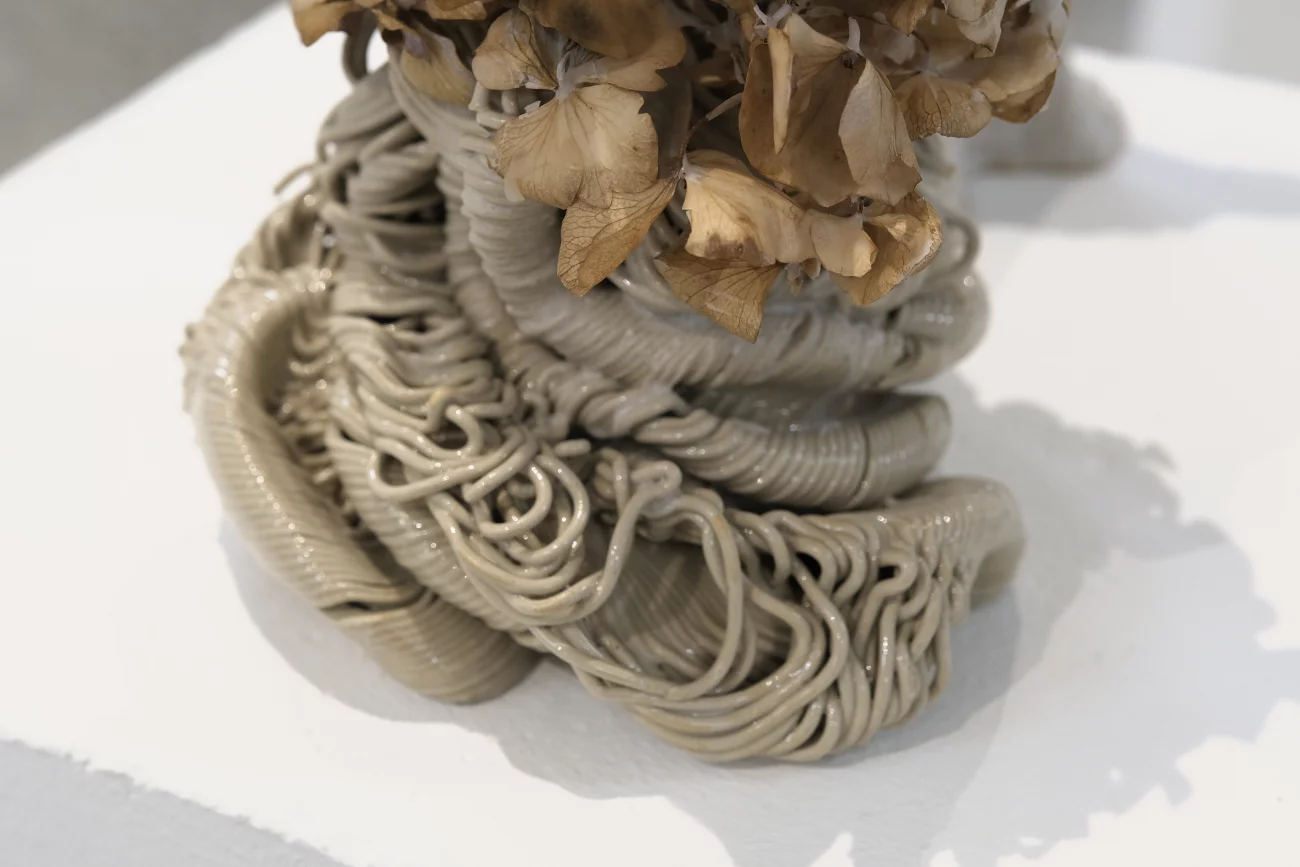
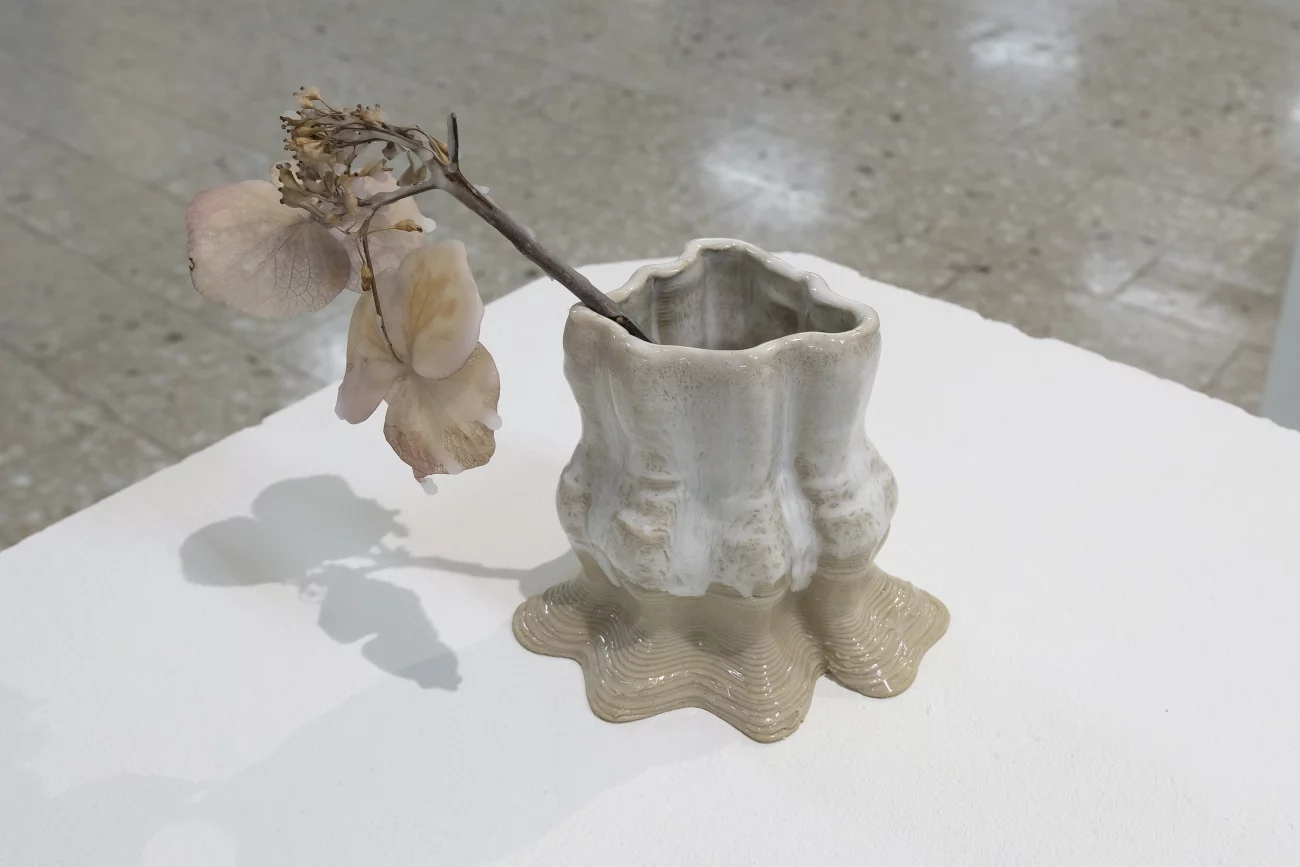
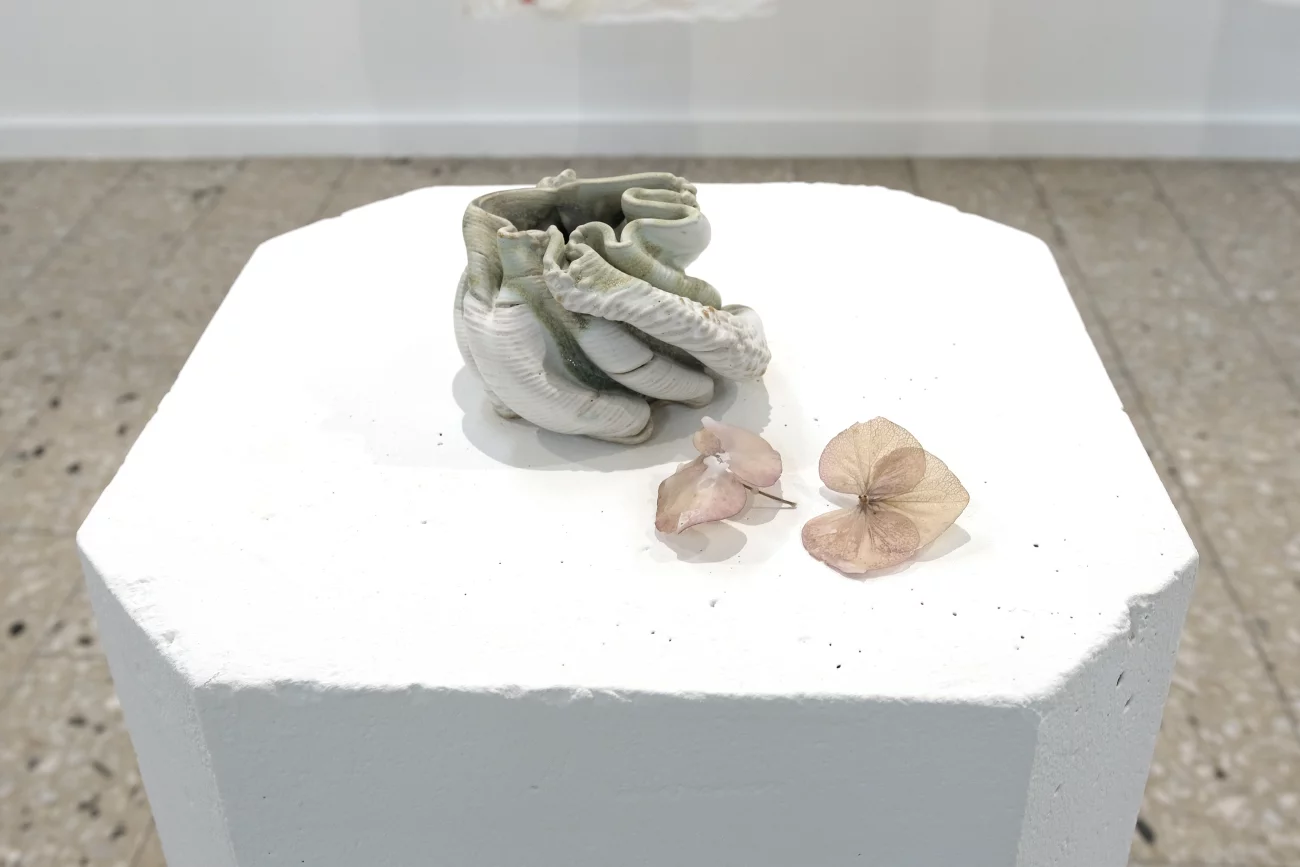
Mummified, living flowers, enclosed in liquid wax, are arranged inside and around vases. They retain their form and colour, yet lose their vitality. The beauty of the flowers remains visible while simultaneously conveying the unsettling sense of witnessing the living death of nature. The flowers will never wilt again, but they will also never be truly fresh. An eternal, beautiful, dead life. The vases are made of clay, an organic material of the earth, shaped through a mechanical 3D-printing process. The digital models are based on the forms of tree lichens. In the printing process, the organic and the machinic encounter one another: the wet clay does not fully obey the logic of the machine but responds according to its own material properties. The machine attempts to reproduce organic structures after natural models, yet repeatedly encounters the impossibility of fully controlling the “living” material. A field of tension emerges between the organic and the machinic, in which both qualities are present at the same time.